Is Solar a Good Investment for UK Homeowners?
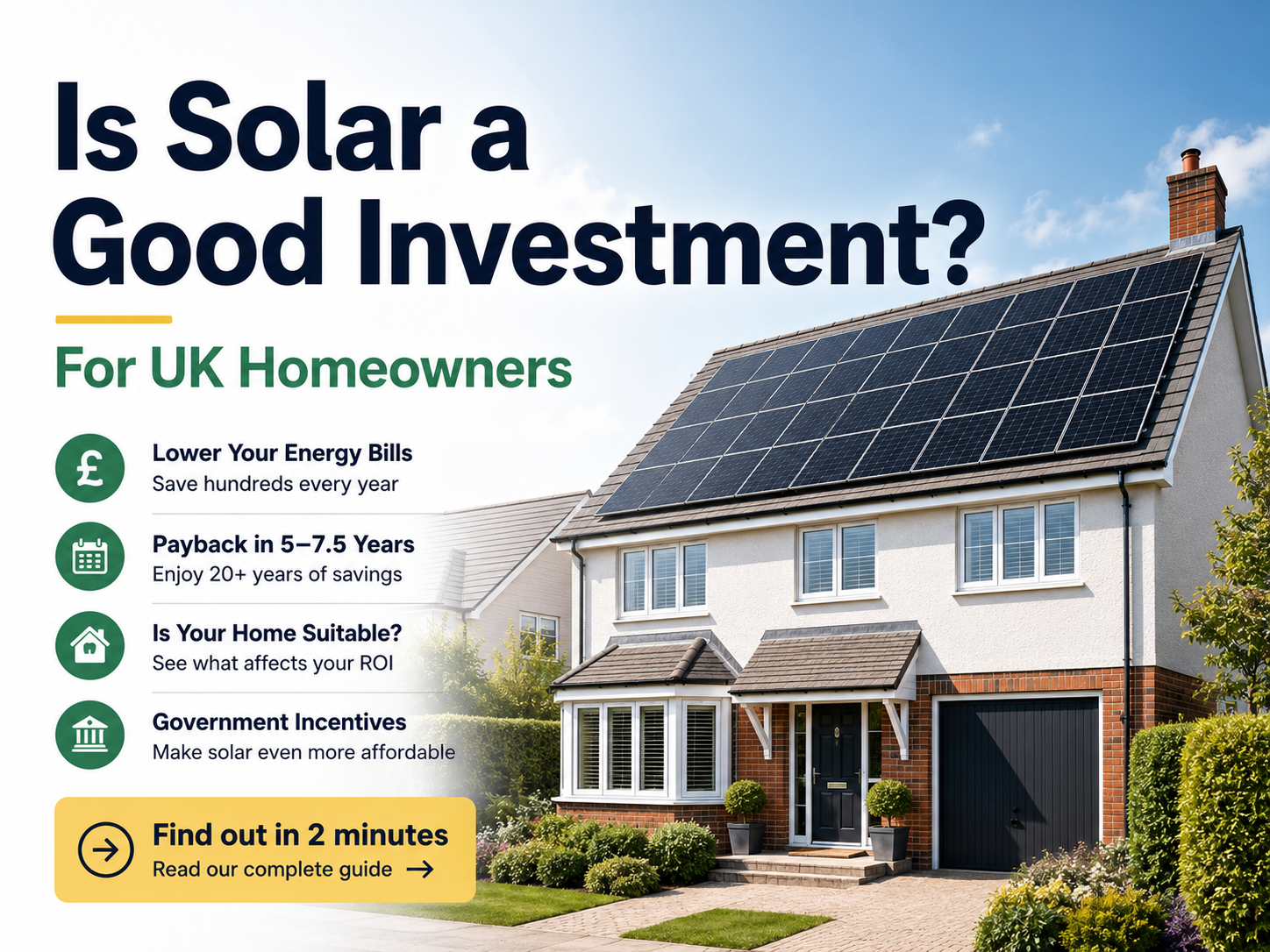
With energy prices remaining unpredictable and more households looking for ways to reduce their monthly bills, many homeowners are asking the same question: Is solar a good investment?
Actually, the return on your investment depends on several key factors, including your property, your electricity consumption, and the government incentives available to you.
## 1. Is Your Property Suitable for Solar?
Before calculating the financial return of solar panels, you first need to determine whether your home is suitable for installation. In the UK, most residential properties can install solar panels, but some roof types are less suitable, including:
* Thatched roofs
* Asbestos roofs
* Glass roofs
For flat roofs, installation is often possible, but it depends on factors such as roof condition, available space, structural strength, and shading. A professional site survey is the best way to determine whether your property is suitable. You can consult Sunhome whether your flat roof will be suitable.
## 2. How Much Can You Save with Solar?
Understanding your potential return on investment (ROI) starts with knowing both the cost of a solar system and how much electricity it can generate.
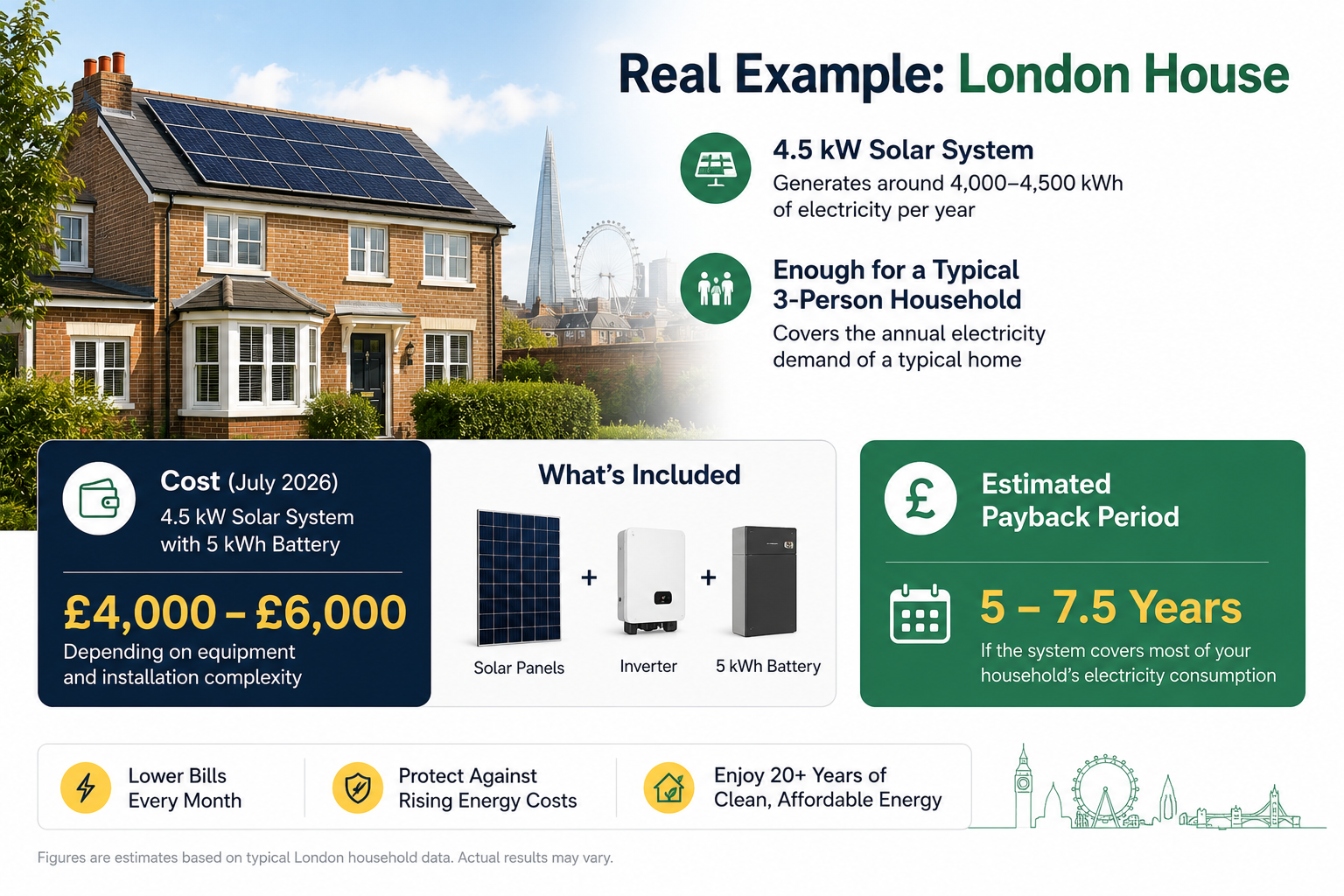
Taking London house as an example:
A 4.5 kW solar system typically generates around 4,000–4,500 kWh of electricity per year. This is generally enough to cover the annual electricity demand of a typical three-person household.
As of July 2026, a 4.5 kW solar system with a 5 kWh battery typically costs between £4,000 and £6,000, depending on the equipment selected and the complexity of the installation. If the system covers most of your household's electricity consumption, the estimated payback period is around 5 to 7.5 years.
Since high-quality solar panels are designed to last 25 years or more, homeowners can potentially enjoy over 20 years of low-cost or virtually free electricity after recovering their initial investment. In addition to lowering electricity bills, solar also helps protect against future energy price increases, making it an attractive long-term investment.
## 3. Your Electricity Usage Makes a Big Difference
Not every household will achieve the same savings from solar. The more electricity you use during the day, the greater the value you can get from your system.
Based on our installation experience, solar delivers particularly strong returns for homeowners who:
* Own or plan to purchase an electric vehicle (EV)
* Are considering installing a heat pump instead of a traditional gas boiler
* Have higher-than-average household electricity consumption, monthly bills with more than £200
For example, charging an electric vehicle with self-generated solar electricity can significantly reduce driving costs. Likewise, homeowners who switch from a gas boiler to a heat pump generally increase their electricity usage, allowing them to make better use of the electricity produced by their solar panels.
## 4. Government Incentives Can Improve Your Return
Government support can also make solar a more attractive investment.
Currently, UK homeowners may benefit from:
* 0% VAT on residential solar panel installations, helping reduce the upfront installation cost.
* Warm Homes Plan initiatives, which may provide financial support for eligible low-income households installing energy-efficiency improvements, including renewable energy technologies where applicable.
Eligibility varies depending on your circumstances and local schemes, but these incentives can significantly improve the financial return for qualifying homeowners.
If you're unsure whether solar is the right investment for your property, a professional assessment of your roof, electricity usage, and future energy needs is the best place to start. A tailored design will give you the clearest picture of your expected savings and return on investments.